28 MAY 2026
The global logistics sector stands at a crossroads: the urgent need to reduce greenhouse gas (GHG) emissions and the constant effort to optimize operational costs in an environment of volatile energy prices. Diesel, historically the dominant fuel, presents structural, economic, and environmental limitations. This document analyzes the viability of LNG as a transition fuel, highlighting its cost profile, environmental benefits, and strategic applicability in heavy-duty vehicles, shipping, and high-demand operations, such as hydraulic fracturing (fracking) and sand transport in the Neuquén Basin (Vaca Muerta).
The challenge of freight transport
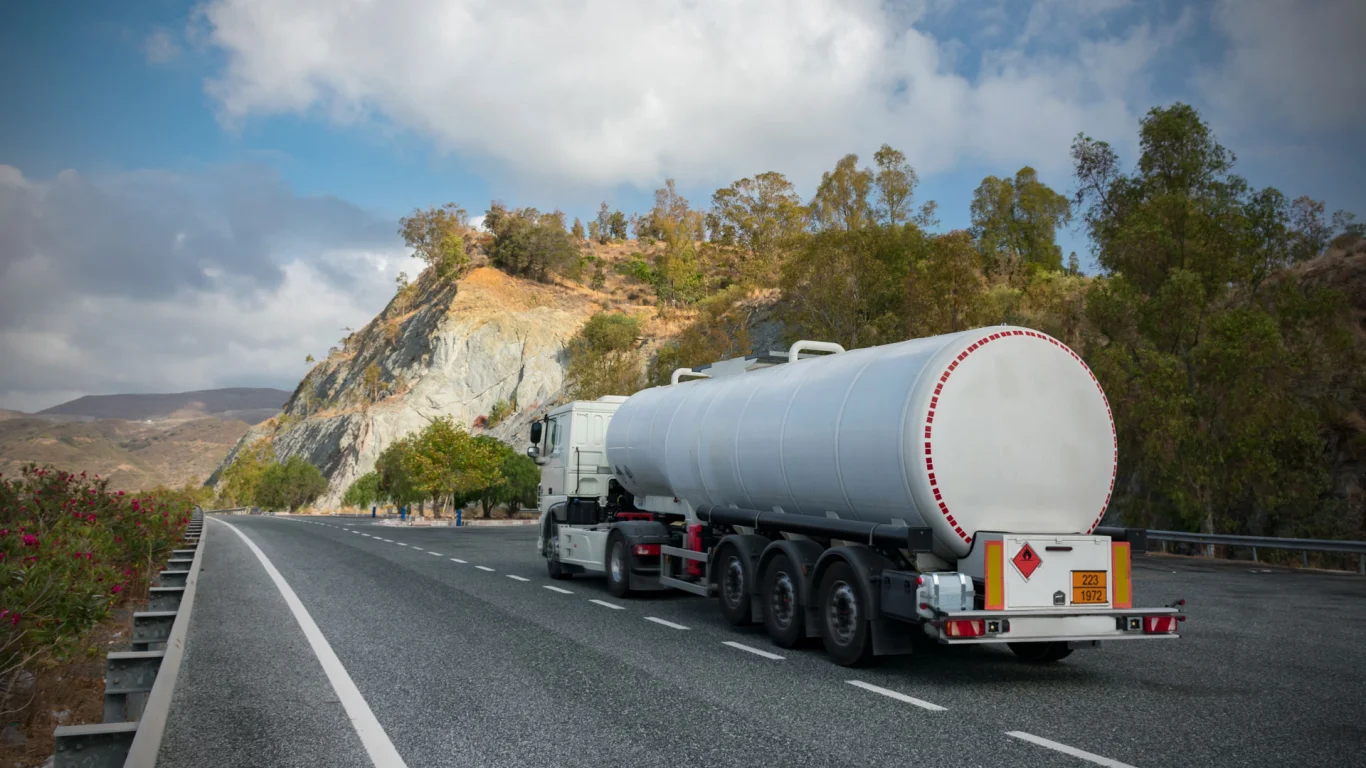
Heavy-duty transport is a backbone of the modern economy, especially in Argentina, but it is also responsible for a significant proportion of particulate matter (PM) and CO2 emissions. Globally, the sector has relied on diesel due to its energy density and availability. However, diesel dependency creates financial vulnerability in the cost structure of transport companies due to the volatility of refined oil prices, which frequently decouples from the cost of primary energy resources.
Analysis of the problem and operating costs (OPEX): Diesel vs. LNG dependency
The persistence of diesel in heavy fleets is not just a result of technical inertia, but of a consolidated global infrastructure that is increasingly inefficient against current profitability and sustainability demands.
Diesel, as a refined product, undergoes a continuous price increase through the value chain (refining, import logistics, distribution), compounded by the global impact of armed conflicts in the Middle East and the threat of blockages or restrictions in the Strait of Hormuz—a critical maritime bottleneck through which approximately one-fifth of the world's oil consumption transits—which drives up international risk premiums and logistics freight costs. In regions with abundant gaseous resources like Argentina, natural gas is a primary resource with less processing and lower cost.
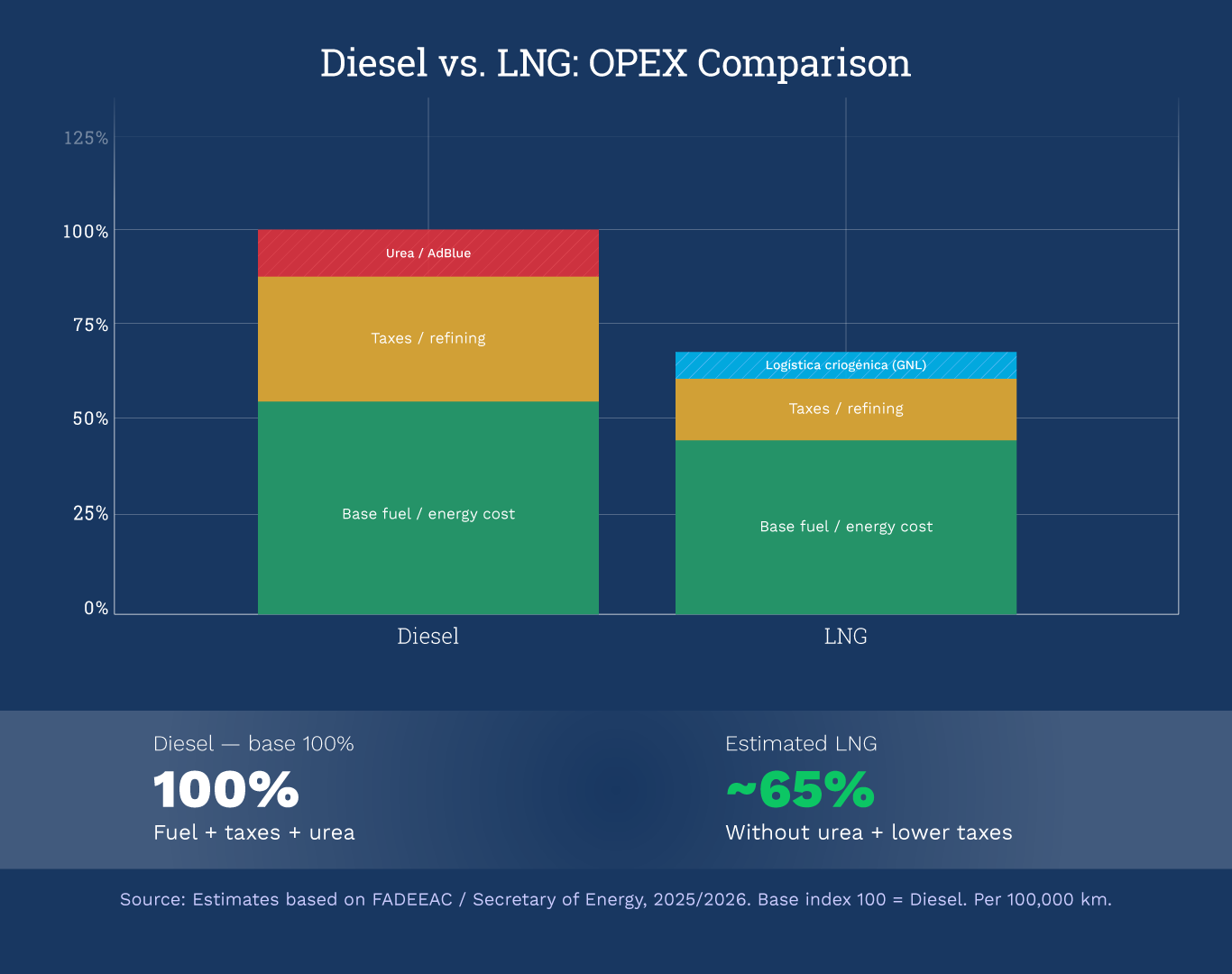
Furthermore, diesel engines face operational challenges such as carbon buildup and the need for complex after-treatment systems (DPF filters, urea/AdBlue), raising the Total Cost of Ownership (TCO). In contrast, LNG—natural gas cooled to -162°C to reduce its volume 600 times— offers a clean-burning alternative with high energy density.
Comparison of operational parameters:
| Indicator | Diesel (Grade 3) | Liquefied Natural Gas (LNG) |
| Cost per Energy Unit | High (Linked to refined market) | Low (Linked to local/wellhead gas) |
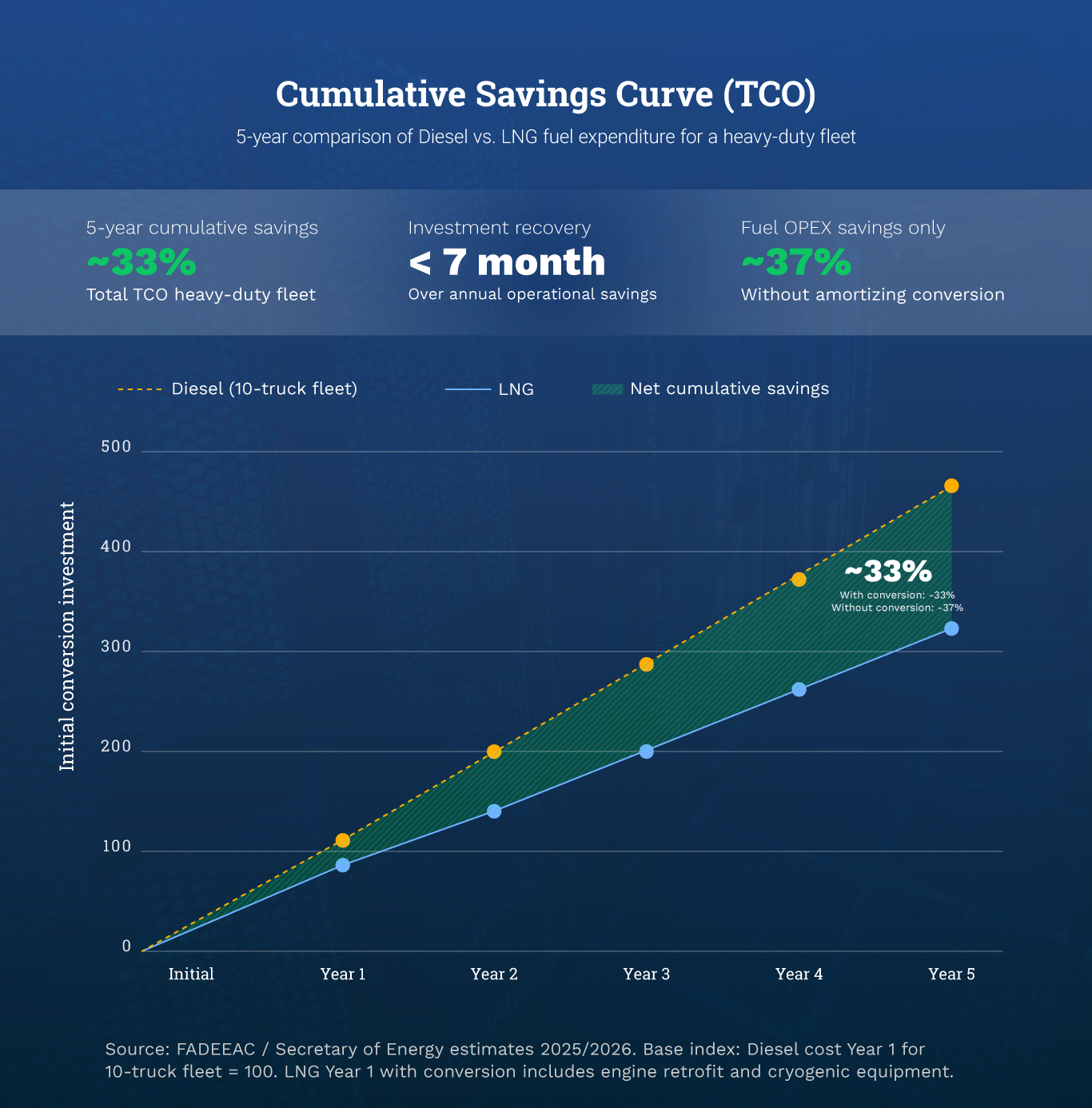
| Costs (Estimated) | Base (100%) | 30% - 40% lower |
| CO2 Emissions | Base (100%) | 20% lower |
| Particulate Matter (PM) | High | >95% lower |
| After-treatment Complexity | High (Requires urea) | Minimal (Cleaner combustion) |
This transition toward LNG allows for a necessary decoupling: while the price of diesel is subject to the volatility of the imported oil barrel, natural gas allows for greater stability in operating costs, benefiting the competitiveness of heavy-duty transport fleets. LNG reduces the accumulation of residues in the injection system and the crankcase, which prolongs the useful life of lubricants and critical engine components, reducing fleet downtime.
In this spectrum of solutions, CNG is positioned as a highly valuable complementary alternative, especially for fleets operating in regional logistics, urban distribution, or short-distance routes. Like LNG, CNG guarantees clean combustion and a substantial reduction in operating costs compared to diesel, and it is an optimal solution for short-range operations thanks to the simplicity of its storage systems, while LNG is consolidated as the standard for heavy-duty and long-distance freight transport, as its higher energy density allows for extended ranges without compromising the vehicle's payload capacity.
Technical evidence and economic benefits
The replacement of diesel with LNG offers immediate quantifiable results:
- Operational autonomy: On-board cryogenic storage systems allow for ranges of more than 2,000 km, matching or exceeding the performance of conventional diesel tanks on long routes.
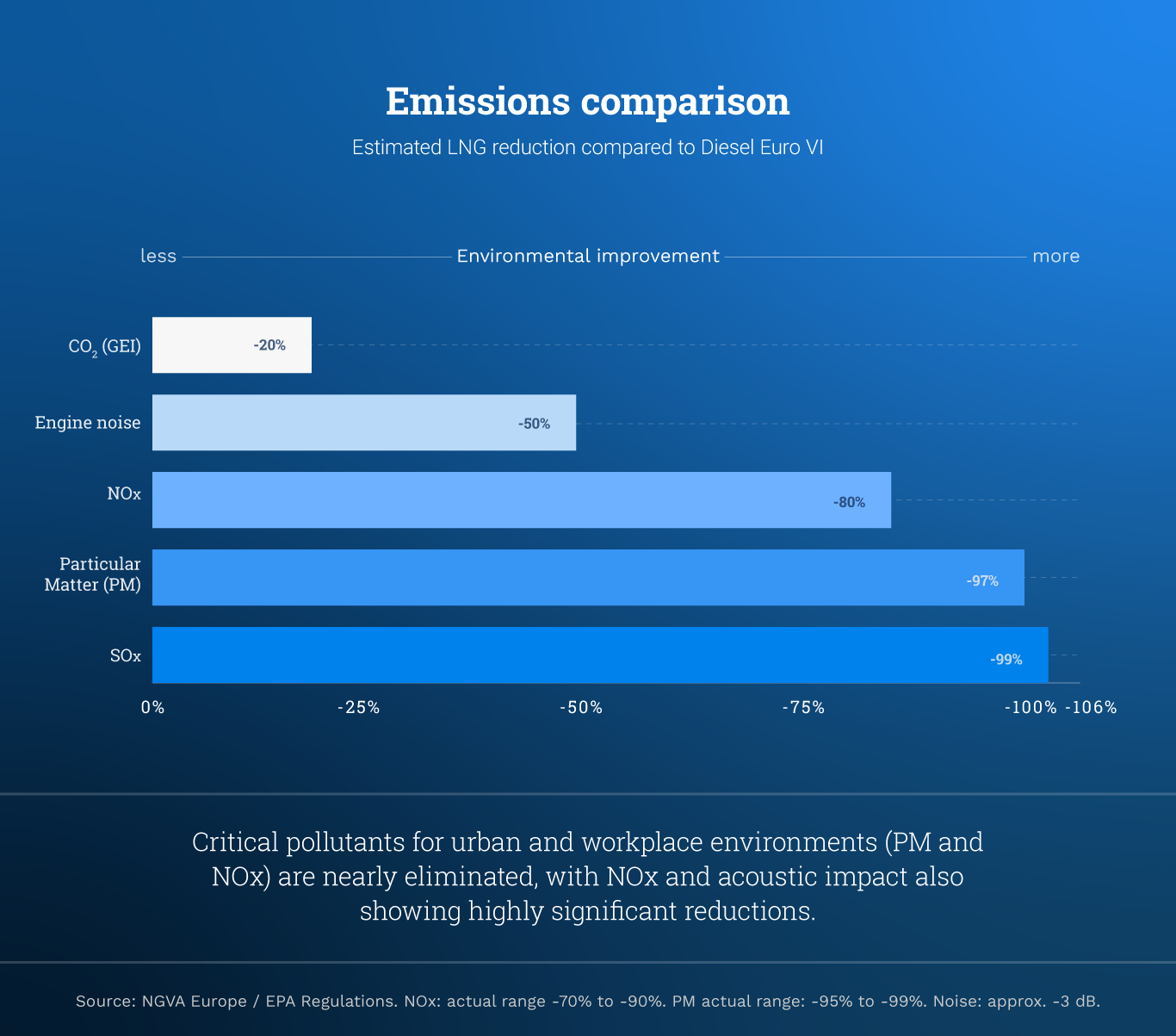
- Emissions reduction (GHG): Decrease of up to 20% in CO2 emissions compared to diesel. [Source: NGVA Europe]
- Air quality and environment: Elimination of more than 95% of particulate matter (PM) and drastic reductions in nitrogen oxides (NOx). Furthermore, Otto cycle engines fueled by natural gas significantly reduce noise pollution, a critical factor in 24-hour continuous operations.
The role of distributed liquefaction
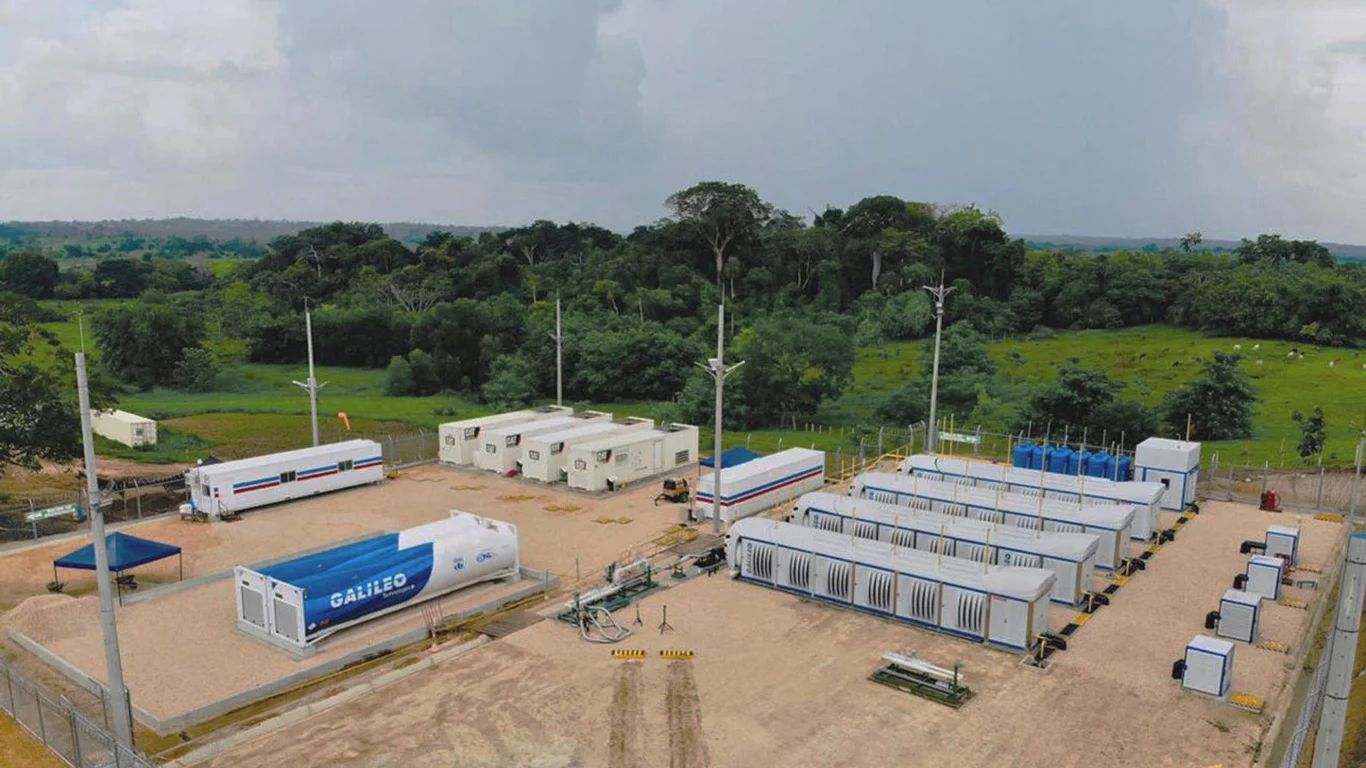
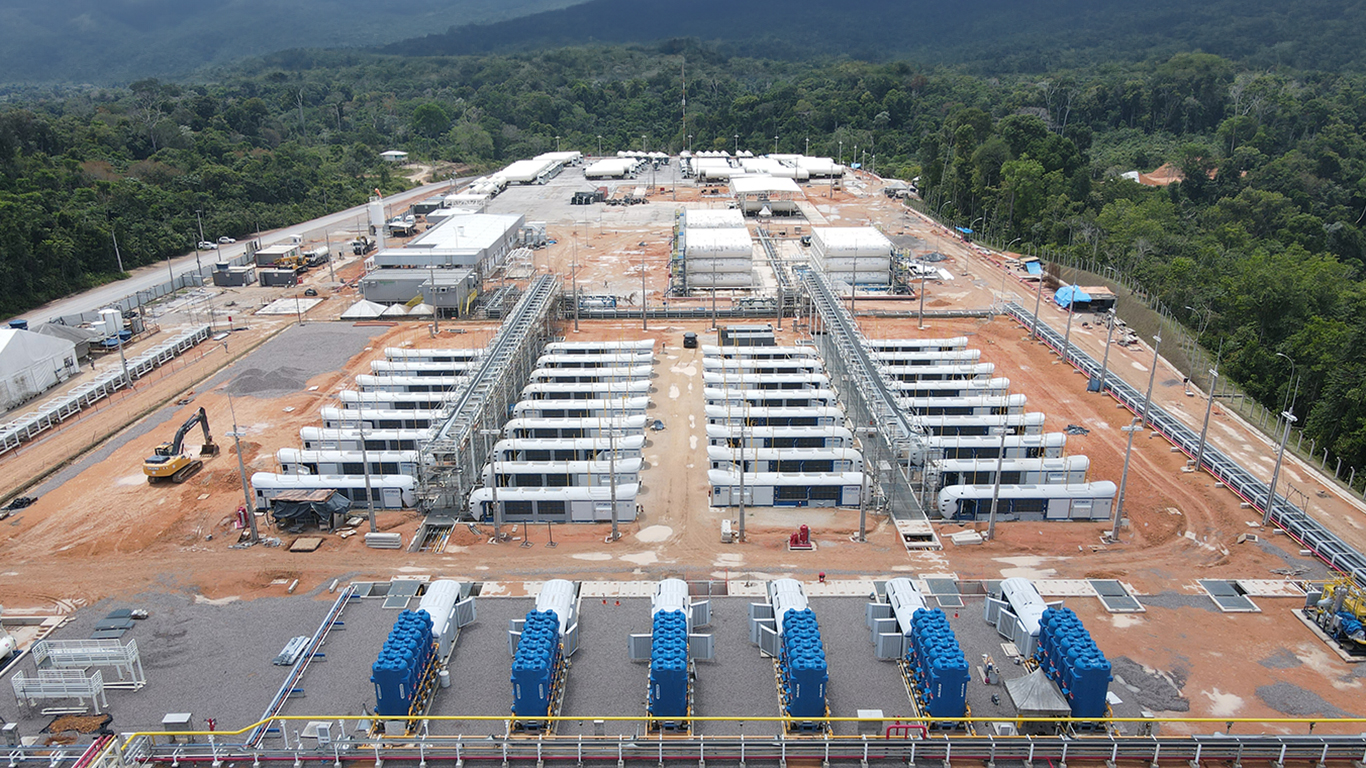
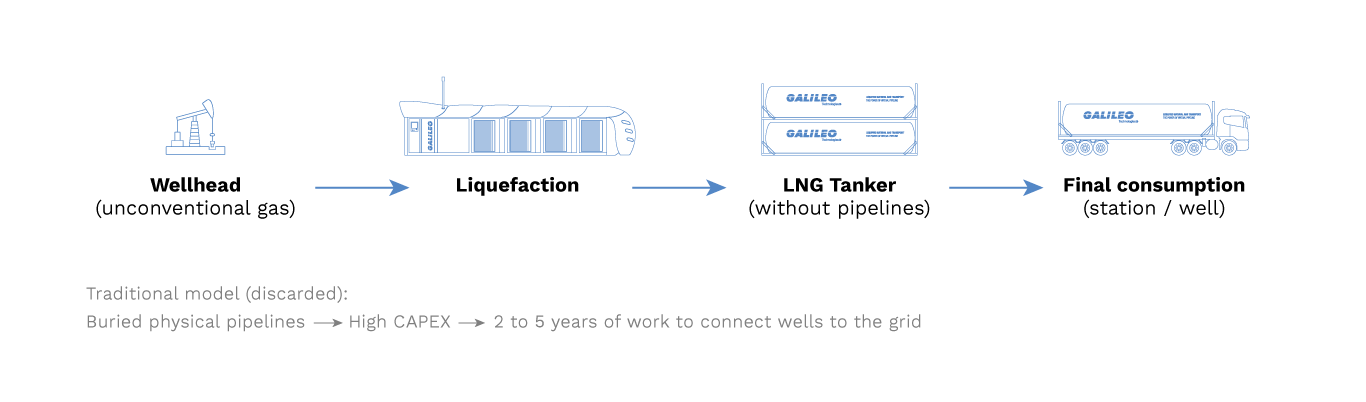
A historical barrier to LNG adoption has been the need for large-scale LNG plants. However, current distributed modular liquefaction technology allows for small and medium-scale plants to be installed directly at wellheads or pipeline nodes.
- Domestic Production: The capacity to liquefy gas near the point of consumption (or production) reduces the logistics footprint and allows regional economies to benefit from their own energy resource.
- Agility: Modular systems allow for rapid deployment, eliminating the need for large investments in physical pipelines to move fuel to service stations.
- Scalability: Apart from rapid deployment, modularity allows for increasing production and supply as demand grows, reducing the initial investment.
Applicability in Vaca Muerta: Fracking and Sand
The Neuquén Basin is the scenario of greatest impact for the implementation of LNG. In fracking operations and sand transport, LNG acts as an efficiency multiplier:
- Fracking Decarbonization: The use of natural gas in fracking pumps displaces millions of liters of fuel at international prices monthly. Using Vaca Muerta's own gas, liquefied at the wellhead, shields the operation against supply crises or international fluctuations. On the other hand, 100% natural gas (or dual-fuel) fracking technology already exists in the world and is already a reality in Argentina.
- Sand Logistics: Fleets transporting sand from local quarries or from other provinces (such as Entre Ríos) to the deposits can operate 100% on LNG. By establishing modular loading stations along the Virtual Pipeline® route, the freight cost is drastically reduced, directly impacting the final well completion cost.
- Decongestion and safety: The high energy density of LNG reduces the heavy traffic of diesel tanker trucks on the roads, mitigating the wear of public infrastructure and improving road safety in the region.
Towards carbon neutral: bio-LNG and the circular future
LNG is not only a transition solution but a platform for deep decarbonization, as it is 100% compatible with Bio-LNG, a renewable fuel derived from organic waste (agricultural, livestock, and waste). By adopting LNG today, fleets prepare for the transition toward Bio-LNG, allowing a reduction in emissions that could reach carbon neutrality or negativity, complying with the most demanding ESG standards without new capital investments.
The transition of heavy transport to LNG is a robust technical response to both the need for operational cost optimization and global climate commitments. In regions with an abundance of gas, such as Argentina, this transition allows for monetizing local resources, promoting energy independence, and reducing environmental impact immediately and scalably.